THALeR:
Tripedal Hyper Altitudinal Legged Robot
Robot Name: THALeR (10 m tall), SMALeR (3 m tall)
Principal Investigators: Dr. Dennis Hong
Researchers: Hunter McClelland, Jacob Webb, John Seminatore
D.O.F.: 12
Actuators: 12 Dynamixel PROs
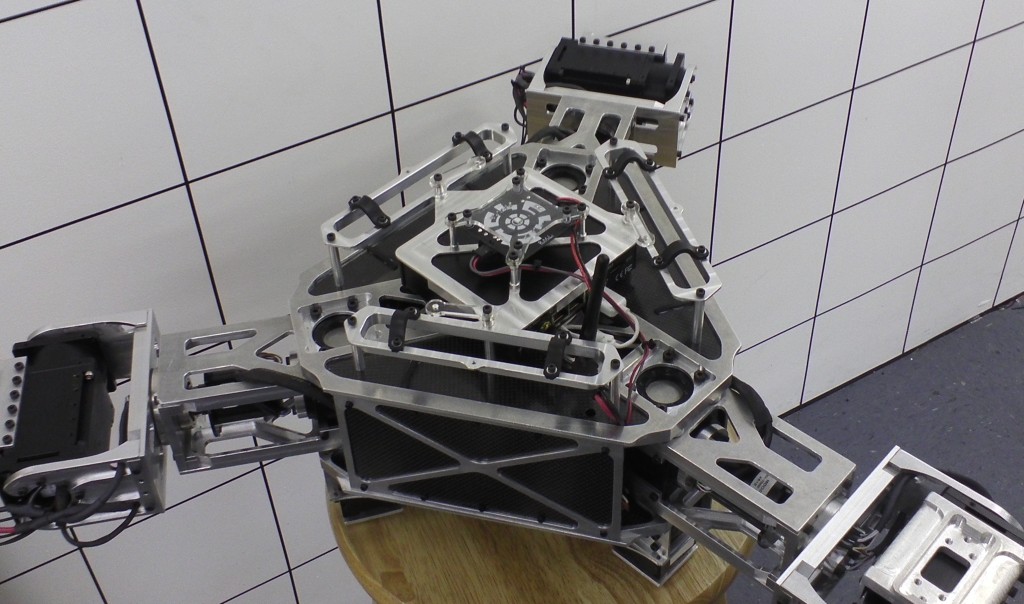
Onboard Electrical: FitPC2, 3 Li-poly batteries, Microstrain IMU
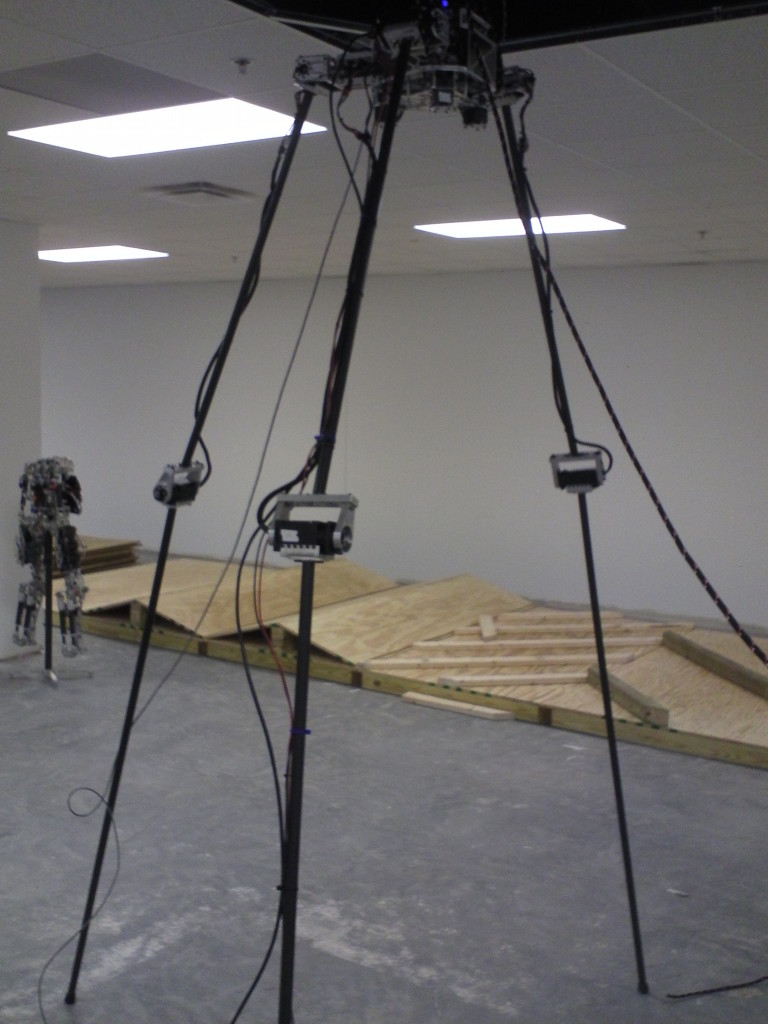
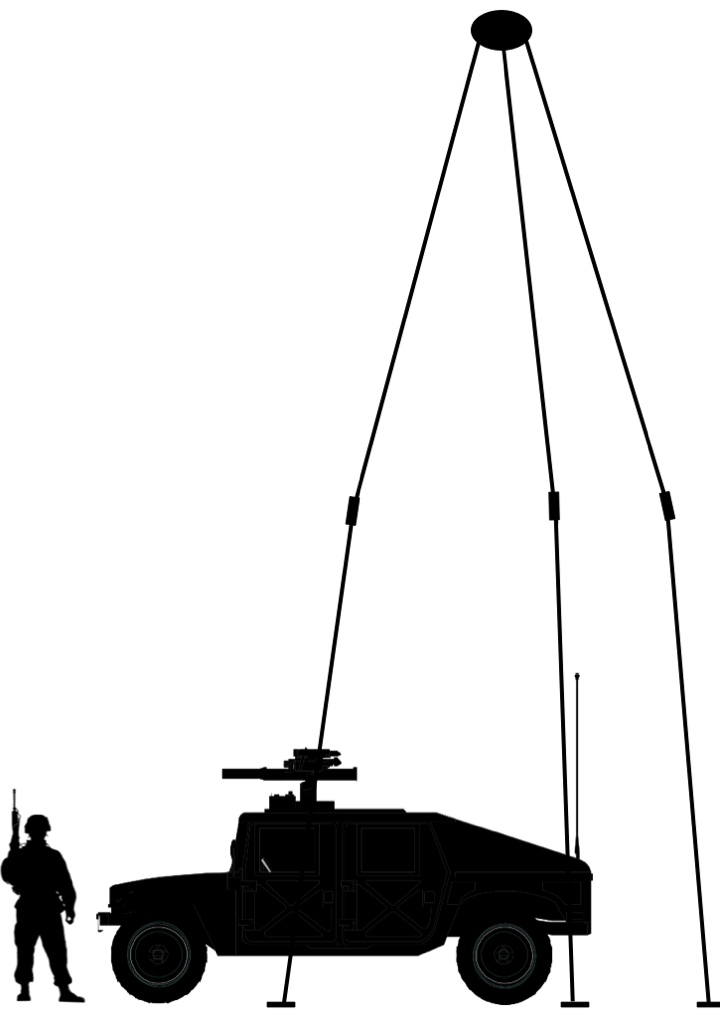
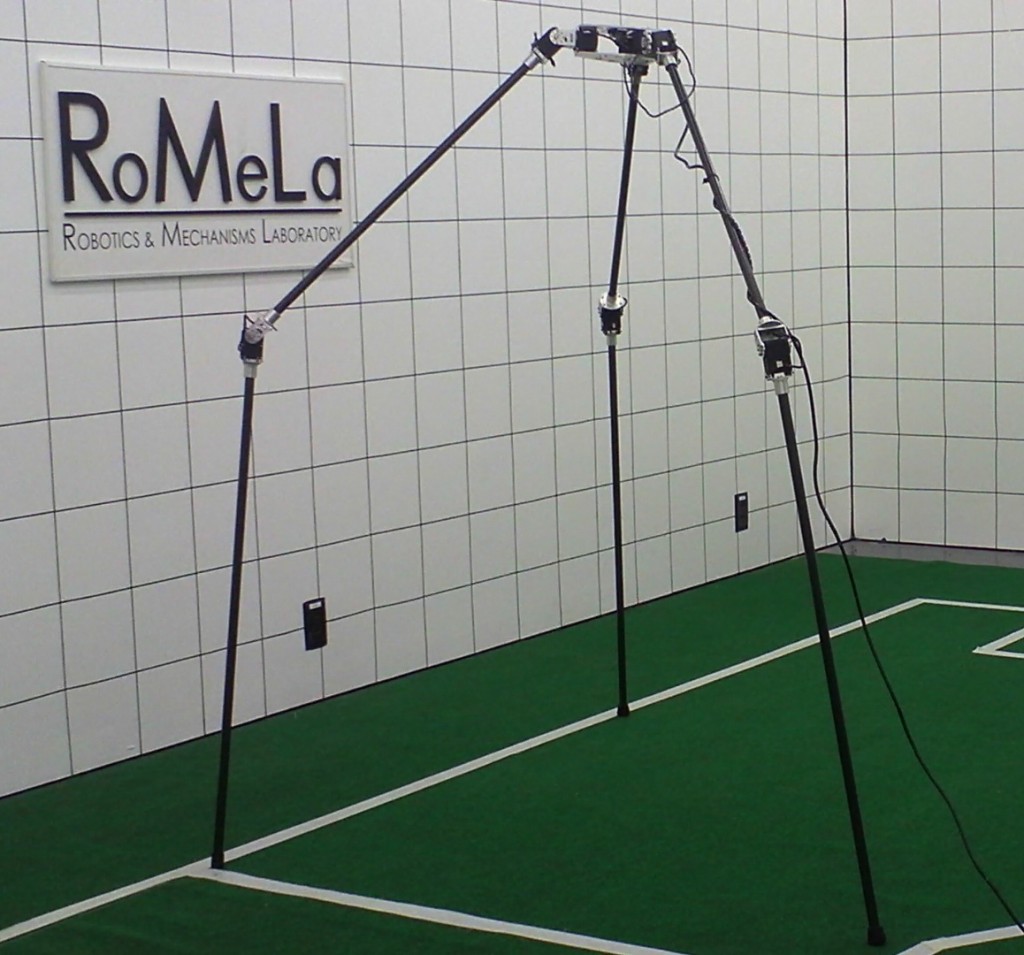
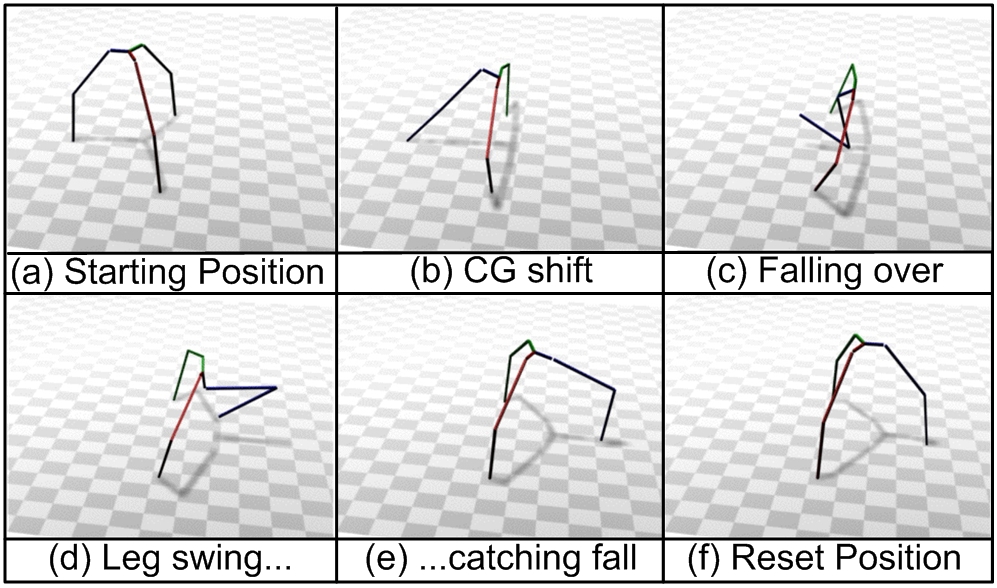
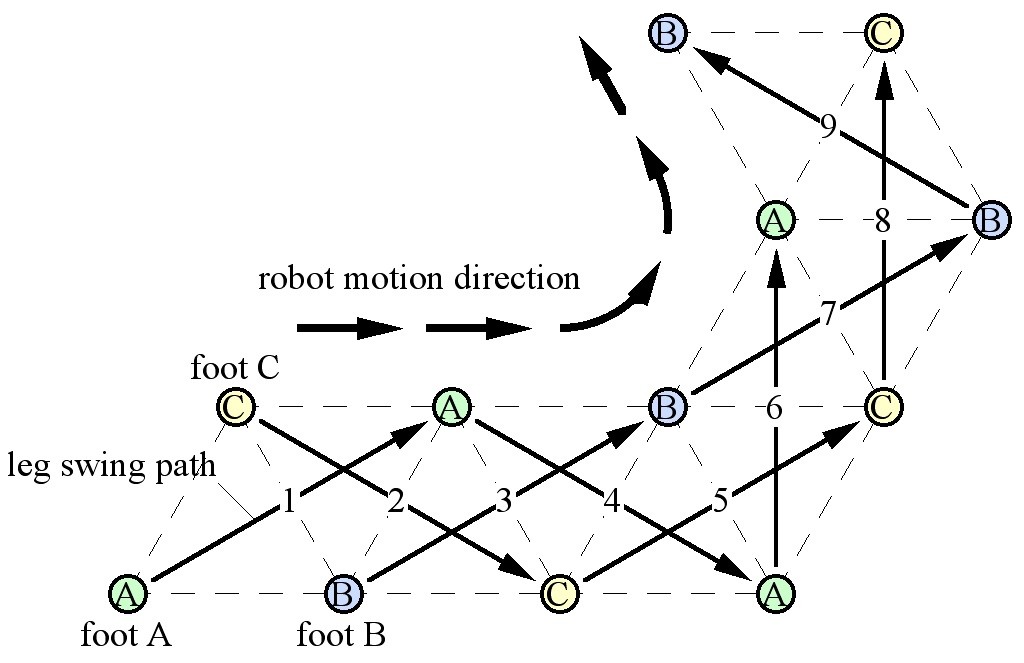
The THALeR project is a research study into a simple key idea: “How much mobility could a legged robot gain by being very tall?” To explore this question, we are creating a tripedal (3-legged) robot with a very unique form of walking, depicted in the figures below. The key advantage of being very tall is increased mobility: being able to step over obstacles as well as traverse naturally rough terrain. But the research-level question still remains: “Having no natural examples, how does one design such a robot?” Our approach is to simultaneously answer two codependent questions: How should the robot walk and what physical design is the best for walking? We are applying advanced computational techniques from Numerical Optimal Control to study the complex system dynamics and gain insight to invariant techniques of good walking. We will be first validating our simulation results on a 3[m] prototype named “SMALeR” and then extending our simulator to make quantitative claims about the 10[m] tall future prototype.
-
What is “good” walking? What gait characteristics are almost always optimal?
-
How much more mobility can be gained from being very tall? How can mobility be quantified?
-
What are scaling relationships for things like energy usage or swingfoot clearance?
-
What materials/sensors/actuators would be needed for a 10[m] tall robot?
Computational Techniques Summary
-
Derive multi-phase symbolic equations of motion from Lagrangian dynamics
-
Generate instantaneous impact equations from Conservation of Angular Momentum
-
Utilize GPOPS-II for Direct Pseudospectral Transcription numerical optimization method
-
Find local optima for a wide range of cost functions, constraints, and parameters
SMALeR Mechanical Summary
- Driven by Dynamixel PRO actuators for 12 rotational degrees of freedom
- Electrical connections enabled by MOOG slip-rings at shoulder-rotator joints
- Onboard batteries, IMU sensor, and FitPC2 computer for untethered operation
- Custom-designed RoMeLa power electronics, all machining done in-house
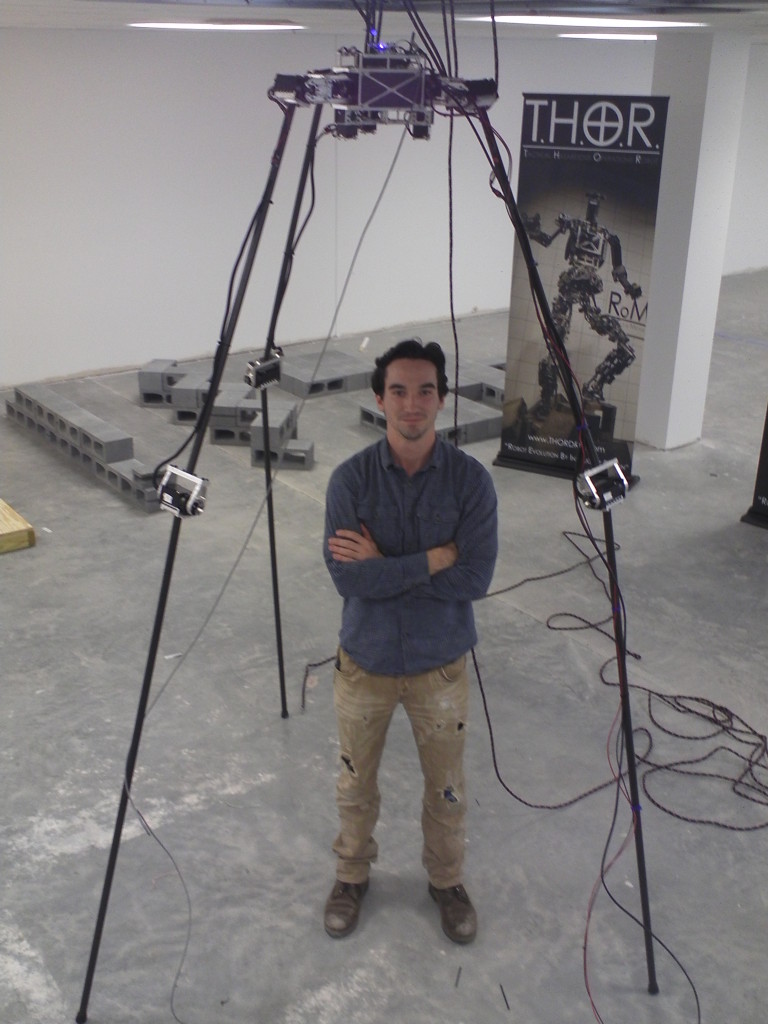
- Single-step test-rig built to approximate proportions, successfully stepping summer 2012 (see figure)
- STriDER 2.0 fully actuated 1[m] precursor, successfully walking fall 2008 on intuitive gait design
- STriDER 1.0 under-actuated 2[m] prototype, exploring passive knee-swing and corresponding gait forms